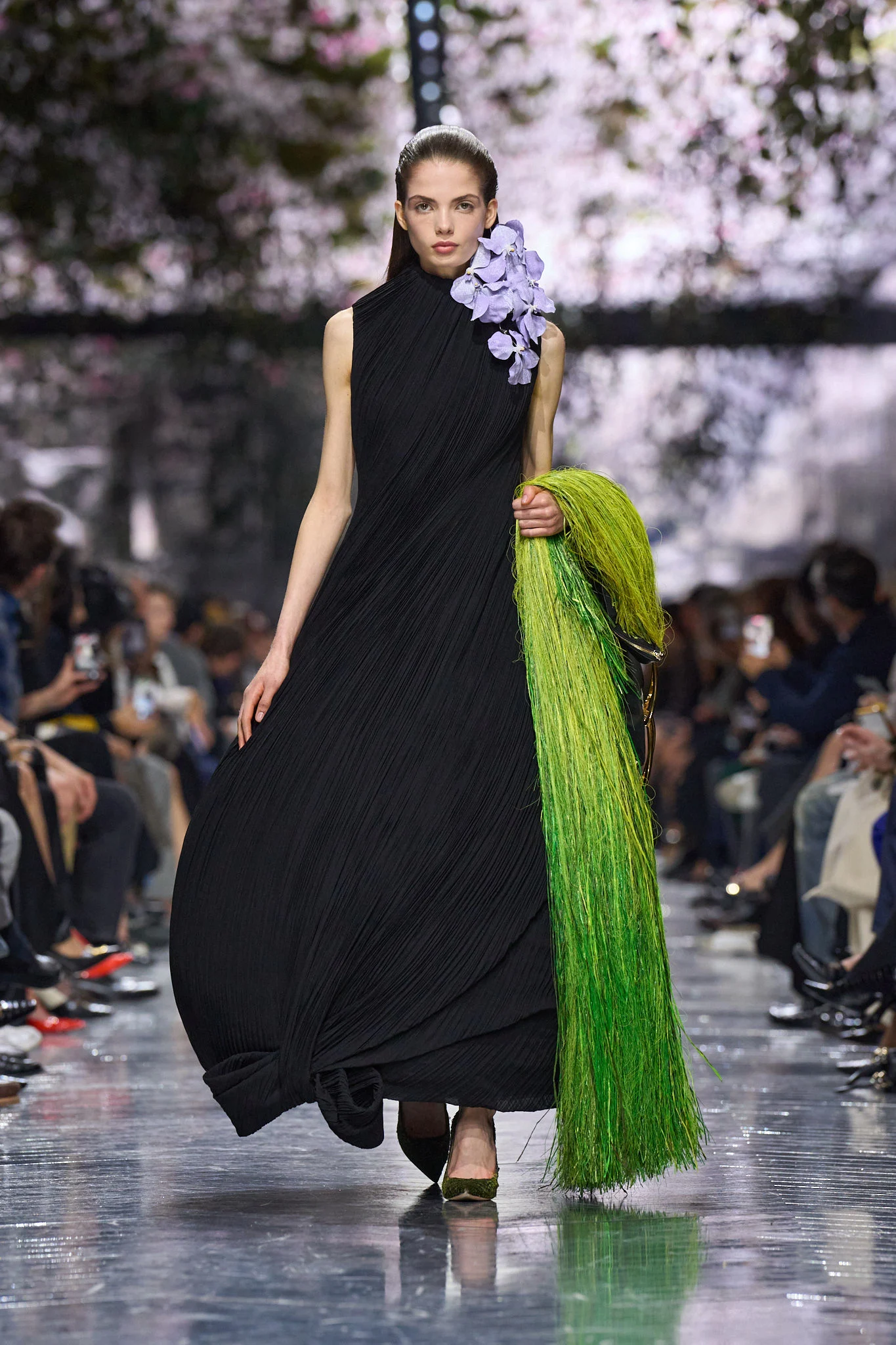
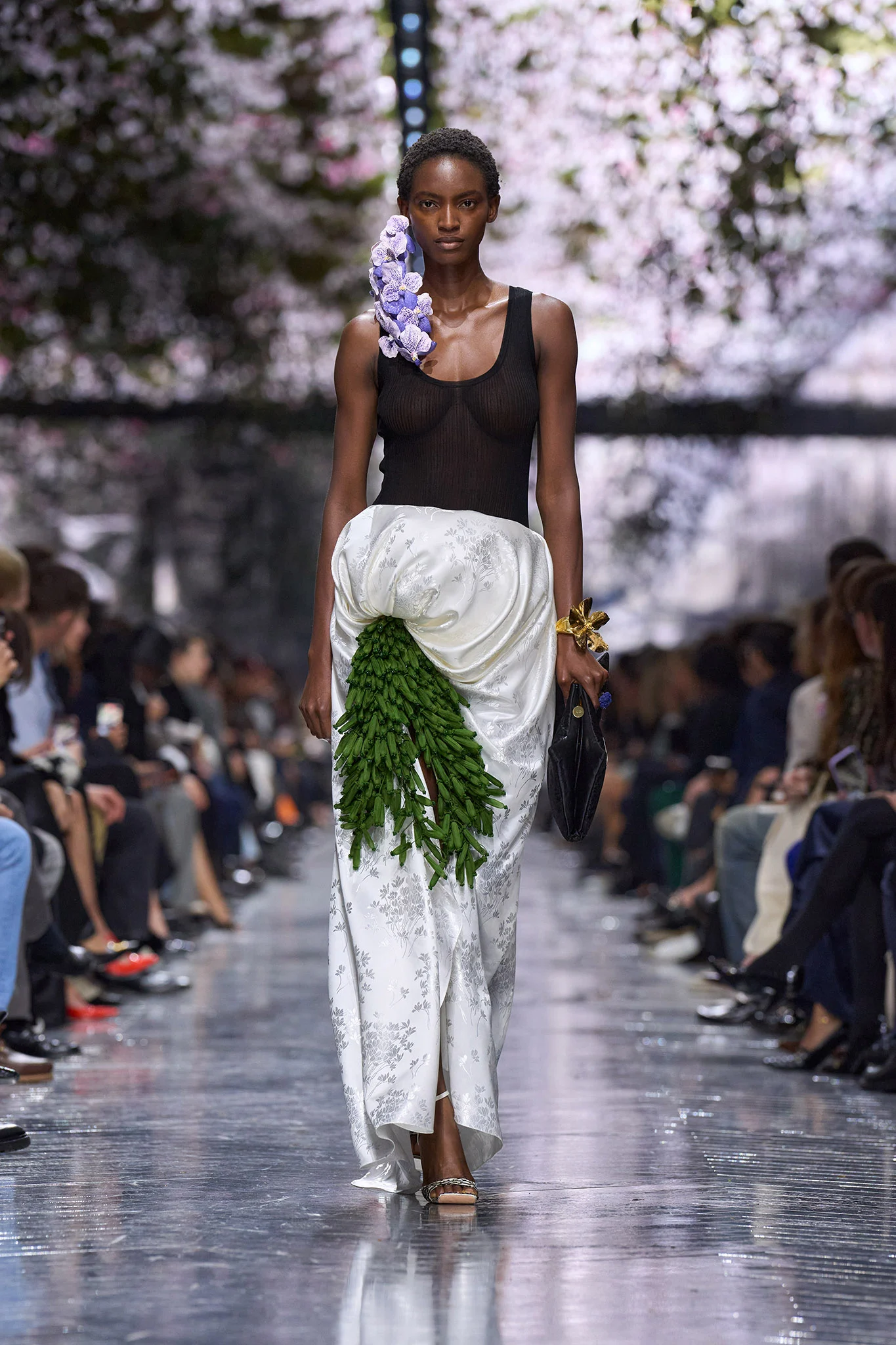
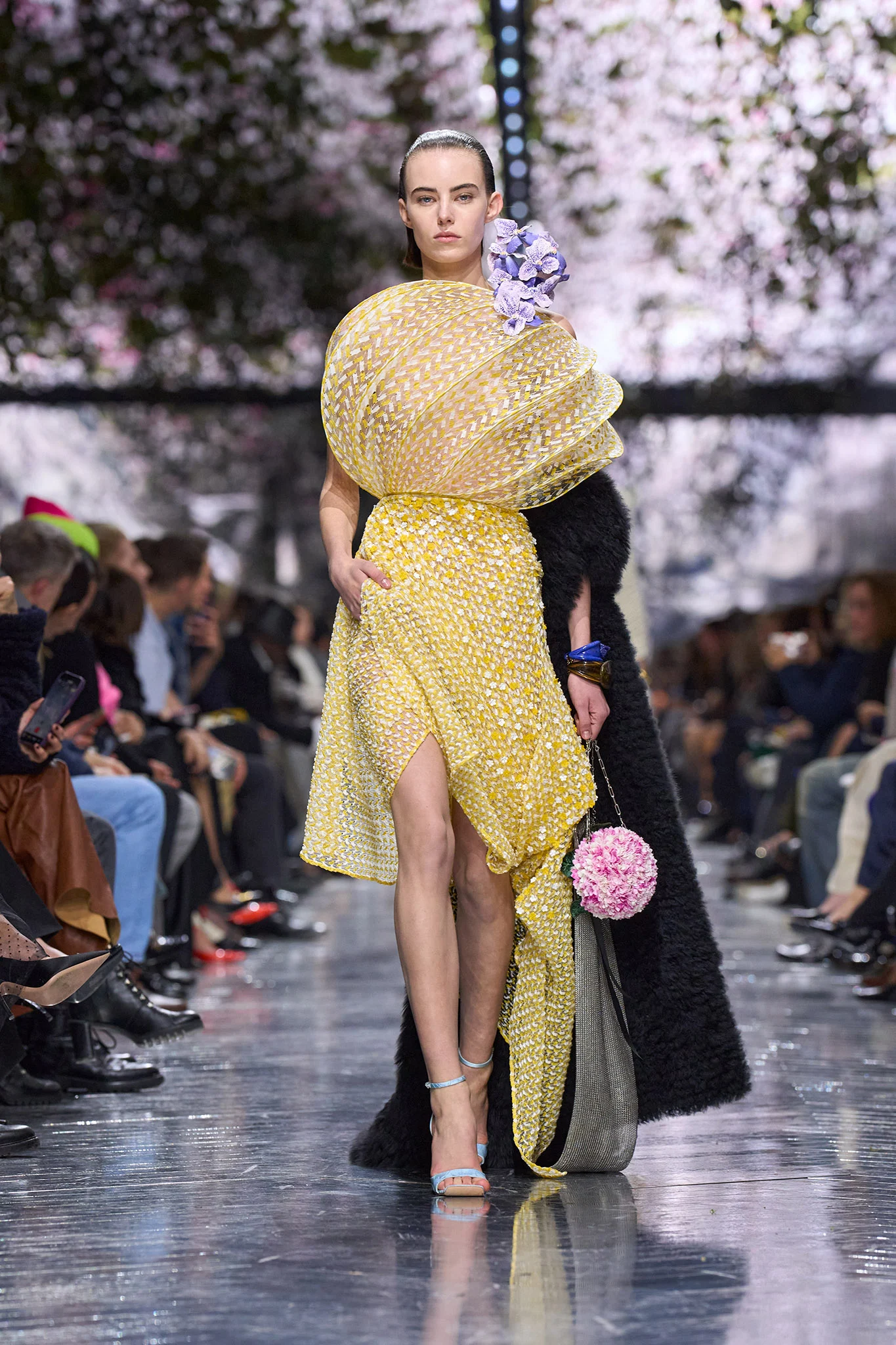
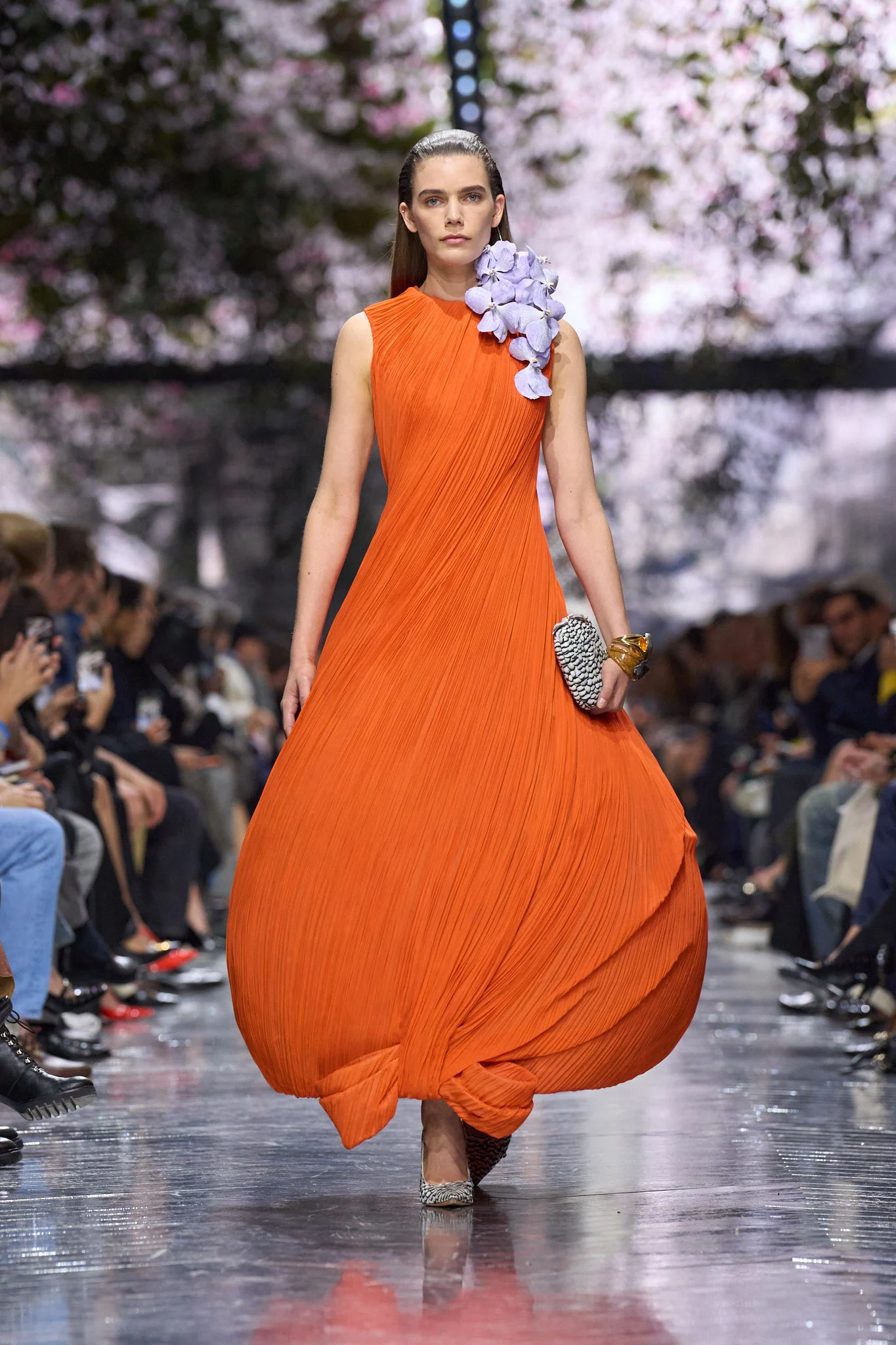
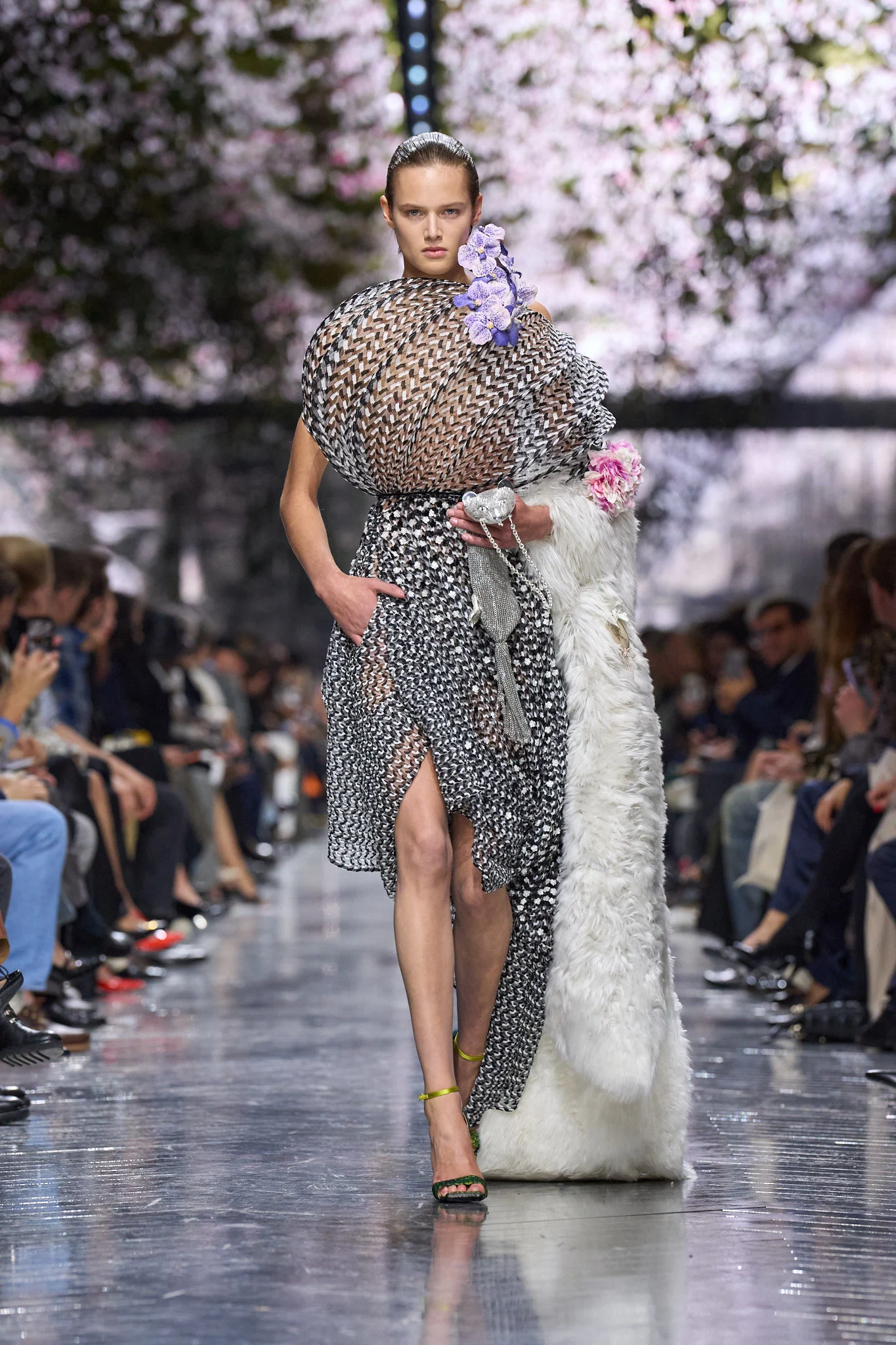
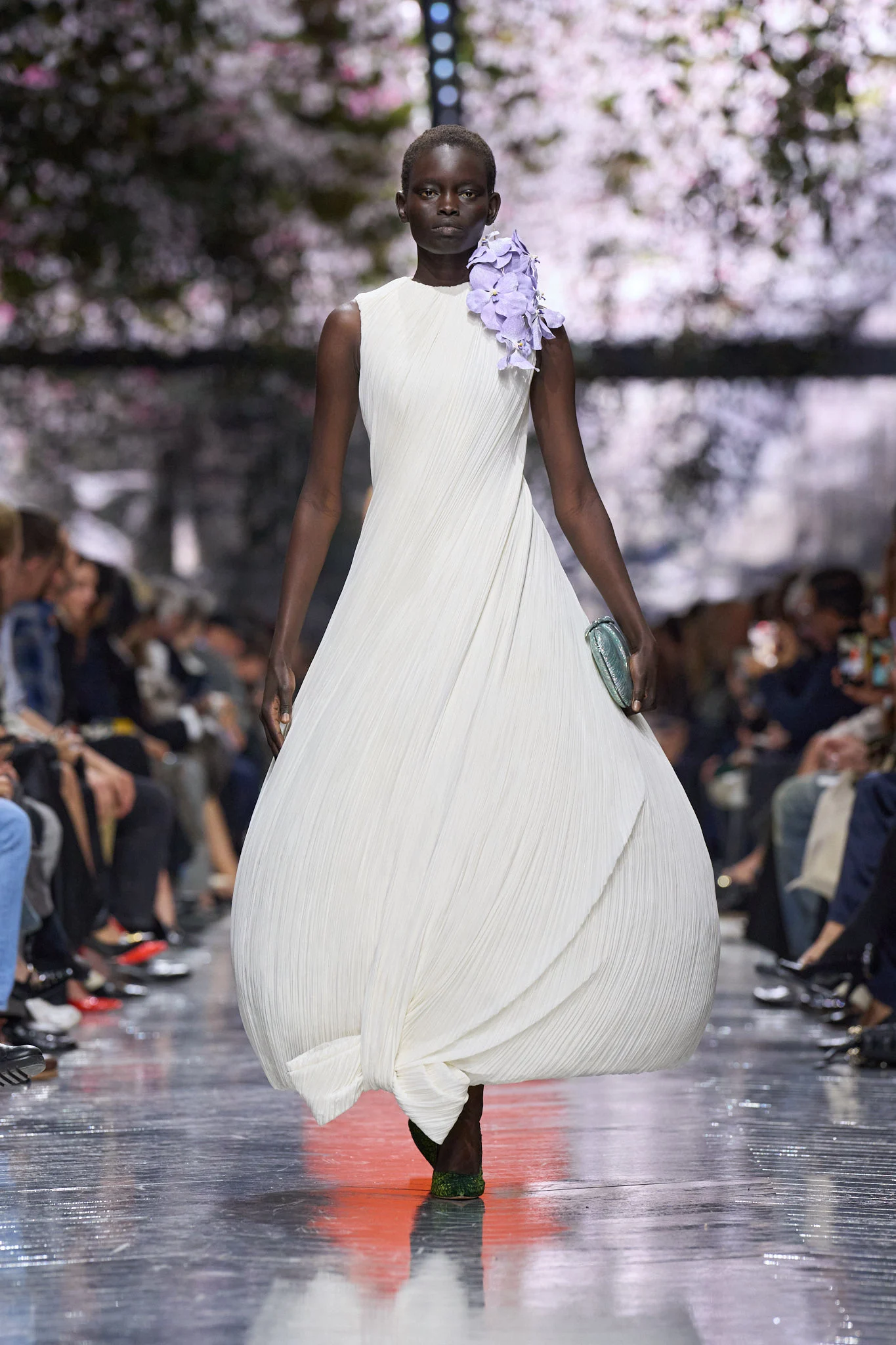
At Paris Fashion Week, Dior presented one of the most anticipated shows of the season. This was more than a collection — it was the beginning of a new chapter under Jonathan Anderson. Known for transforming Loewe into one of the most creative houses of the moment, Anderson brought that same intellectual, artistic energy to Dior, and the shift was immediate.
The setting set the tone. The show unfolded in a carefully constructed space that felt immersive and conceptual, almost like stepping inside an art installation. Sculptural elements, layered textures, and a strong sense of depth created an environment that felt both controlled and expressive. It wasn’t decorative — it was intentional. The atmosphere reflected Anderson’s approach: thoughtful, slightly cerebral, and visually striking without being overwhelming.
That direction carried directly into the collection. Dior moved away from softness and obvious femininity, leaning instead into structure, volume, and experimentation. The color palette remained mostly grounded — blacks, whites, and muted tones — but the shapes and construction brought complexity. This was not about color, but about form.
Silhouettes were distinctive and directional. Tailoring was reworked with unexpected proportions, sometimes exaggerated, sometimes deliberately restrained. Coats felt architectural, dresses played with volume, and layering created depth and movement. There was a sense of tension in the clothes — between tradition and disruption — that made the collection feel alive.
The details revealed Anderson’s signature approach. Textures were explored in subtle but impactful ways, fabrics were manipulated to create shape and dimension, and embellishments were used sparingly. Accessories followed the same logic: less about decoration, more about concept. Every piece felt considered, almost intellectual, as if each look was part of a larger narrative.
What stood out most was the atmosphere of the show. There was a quiet intensity throughout — no need for spectacle, no need for excess. Instead, the focus was on ideas, construction, and presence. It felt like Dior stepping into a more experimental, forward-thinking space, while still holding onto its heritage.
Favorite pieces
Architectural coats with strong, sculptural lines that redefine classic Dior tailoring
Layered silhouettes that create depth and movement without excess
Structured dresses with unexpected volumes, balancing control and creativity
Concept-driven pieces that reflect Jonathan Anderson’s artistic and intellectual approach
This collection marks a clear shift for Dior. Jonathan Anderson is not continuing the previous vision — he is establishing his own. By focusing on form, structure, and concept, he introduces a new kind of modernity to the house.
Dior Fall/Winter 2026 is not about immediate impact or obvious beauty. It’s about direction, evolution, and identity. It signals the start of a new era — one that feels more experimental, more thoughtful, and undeniably influential.
