A controversial designer meets fast fashion’s most strategic player — and quietly reshapes the rules of modern luxury.
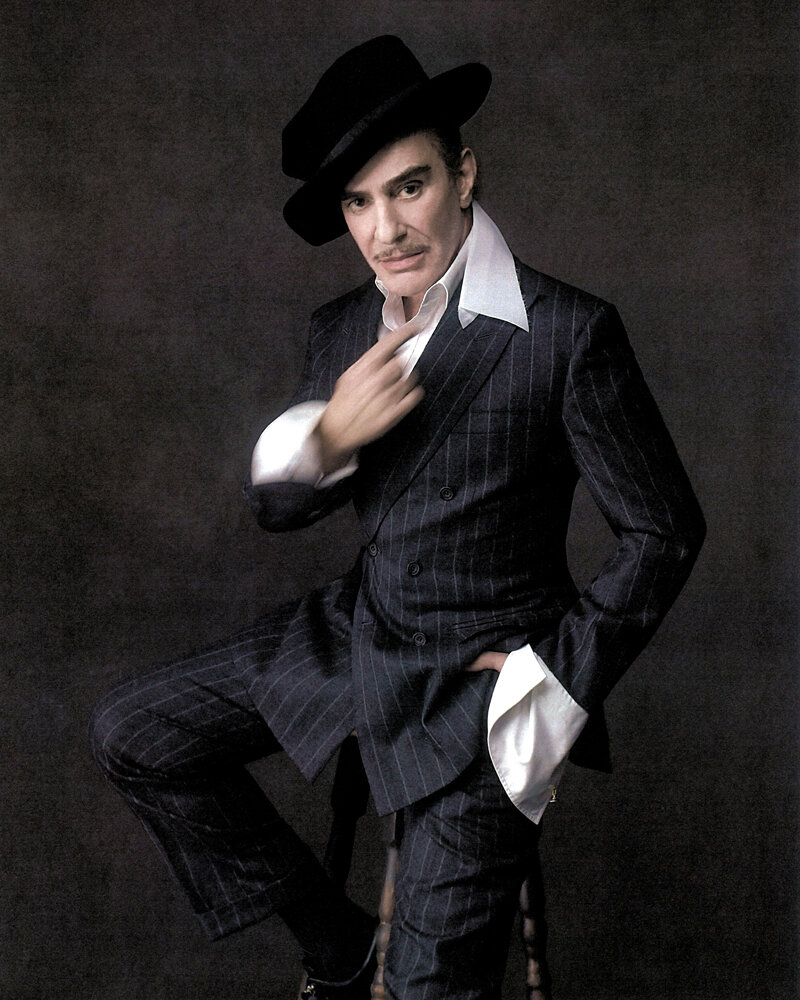
At Paris Fashion Week, Zara announced one of the most unexpected collaborations of 2026: a two-year creative partnership with John Galliano. More than a headline, this move signals a deeper shift in the fashion ecosystem — one where the boundaries between luxury and mass market are becoming increasingly irrelevant.
Galliano is not just any designer. He built his legacy at Dior, where he redefined couture in the late ’90s and early 2000s, before later reshaping Maison Margiela with a conceptual, deconstructed approach. His work has always been theatrical, intellectual, and emotionally charged.
Now, that vision is entering Zara.
Rather than designing a traditional capsule, Galliano will “re-author” Zara’s archives — deconstructing and reconstructing past pieces into new collections launching from September 2026. This approach introduces something new to fast fashion: a couture mindset applied to existing garments, blurring the line between accessibility and artistic process.
This is not just a collaboration — it’s strategy.
Zara has been quietly repositioning itself for years, moving away from pure fast fashion into something more elevated. With Galliano, the brand is no longer just reacting to trends; it is investing in authorship, narrative, and creative legitimacy. Industry observers already see this as a move to compete not only with luxury houses, but also with ultra-fast fashion players like Shein.
The message is clear: Zara doesn’t want to be “fast fashion” anymore — it wants to be relevant fashion.
And Galliano, perhaps unexpectedly, is the perfect vehicle for that shift.
Controversy
Of course, this collaboration doesn’t come without tension.
Galliano’s career has been marked by one of fashion’s most public downfalls. In 2011, he was dismissed from Dior following antisemitic remarks caught on video, leading to years of professional exile. His return through Maison Margiela in 2014 began a slow process of rehabilitation, but his name still carries weight — both creative and controversial.
Bringing him into Zara raises questions.
Not only about his past, but about the ethics of pairing a historically controversial figure with a global mass-market platform. The collaboration has already sparked mixed reactions, with some seeing it as a bold creative move and others as a calculated risk in brand image.
What makes this moment truly interesting is what it represents.
For decades, luxury dictated aspiration while fast fashion delivered approximation. That hierarchy is now collapsing. Zara, through collaborations like this, is inserting itself directly into the creative conversation — not just as a follower, but as a cultural player.
Galliano x Zara is not about clothes alone.
It’s about power, positioning, and the ongoing redefinition of what luxury actually means in 2026.